
The Link Between Strength, Independence and Cognitive Health.
Jun 11, 2026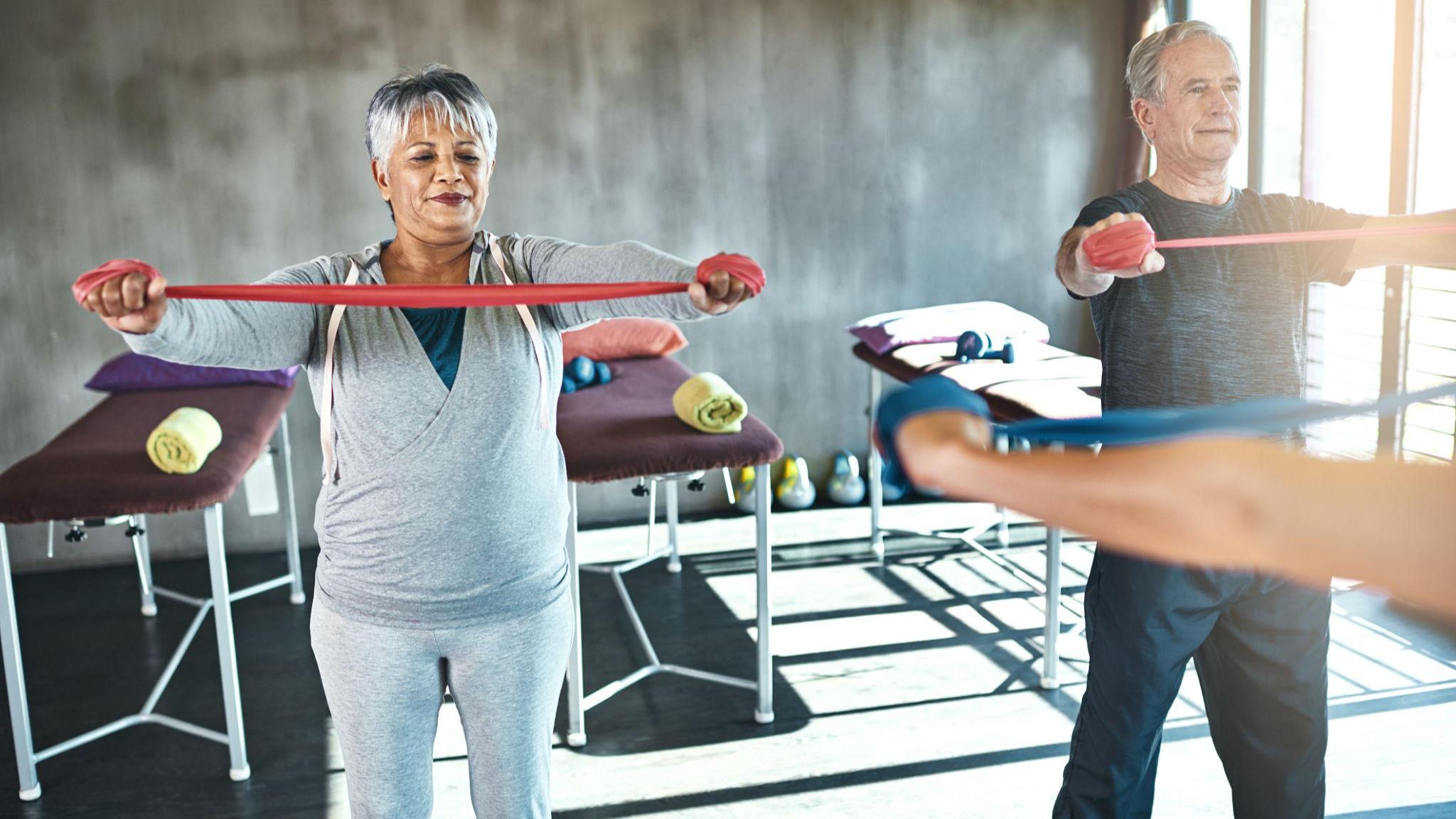
The Link Between Strength, Independence and Cognitive Health
Strength training is about more than building large muscles or lifting heavy weights in a gym. Adults can lose 3-8% of their muscle mass per decade after age 30, with the rate accelerating after age 60. Research consistently shows that muscular strength is associated with better cognitive function, greater independence, and improved longevity.
Several simple functional movements including the farmer's carry, push-ups, and sit-to-stand test have been linked to healthier aging. These abilities help preserve muscle mass, maintain bone density, and support the physical functions needed for everyday life. Emerging research also suggests that muscular strength is not only a marker of physical health but may also be associated with better cognitive function and a lower risk of dementia.
If your ability to perform the following activities is limited, consider the real-world tasks that may become more difficult:
- Navigating uneven or soft surfaces
- Getting out of a chair or off the toilet
- Opening jars or twist-off bottle caps
- Carrying multiple grocery bags in a single trip
- Walking up stairs without using a railing
- Pushing yourself up from the floor after a fall
- Getting in and out of bed
Longevity Benchmark Assessments
Farmer's Carry
Hold a weight in each hand while maintaining tall posture with your shoulders back, core engaged, and chin slightly tucked. Look straight ahead and walk forward using short, slow, controlled steps. Avoid swinging, swaying, or bouncing the weights. This exercise is not about speed; it is about maintaining control while carrying a challenging load in each hand.
Linked to:
- Grip strength
- Postural and core stability
- Balance
- Gait and coordination
Goals:
- Women: Carry 75% of total body weight (divided between both hands) for 60 seconds.
- Men: Carry 100% of total body weight (divided between both hands) for 60 seconds.
Push-Ups
Begin in a high plank position with your hands slightly wider than shoulder-width apart and fingers spread. Lower your body as one unit by bending your elbows to approximately a 45-degree angle. Continue until your chest nearly touches the floor, then press through your palms to return to the starting position.
Many individuals will need to progress gradually from wall push-ups to countertop push-ups to bench push-ups to knee push-ups, and eventually traditional floor push-ups.
Linked to:
- Cardiovascular fitness
- Reduced frailty
- Upper-body strength
- Ability to push yourself off the floor
- Functional independence
Goals:
- Women:
- Mid-40s: 14–17 repetitions
- Ages 55–65: 10–14 repetitions
- Ages 65+: 5–10 repetitions
- Men:
- Mid-40s: 16–20 repetitions
- Ages 55–65: 12–18 repetitions
- Ages 65+: 10–15 repetitions
Sit-to-Stand (30-Second Chair Stand Test)
Place a standard chair (17–18 inches high, without wheels) against a wall. Sit in the middle of the chair with your arms crossed over your chest and feet flat on the floor. Stand up fully using good posture, then sit back down with control. Repeat as many times as possible in 30 seconds. Only fully completed stands should be counted.
Linked to:
- Lower-body strength
- Balance
- Mobility
- Core strength
Goals:
- Women:
- Ages 60–64: 12–17 repetitions
- Ages 65–69: 11–16 repetitions
- Ages 70–74: 10–15 repetitions
- Ages 75+: 8–14 repetitions
- Men:
- Ages 60–64: 14–19 repetitions
- Ages 65–69: 12–18 repetitions
- Ages 70–74: 12–17 repetitions
- Ages 75+: 8–15 repetitions
These activities are measures of functional strength—the ability to maintain the muscle mass, coordination, and stability needed to perform everyday tasks safely and independently. Functional strength becomes increasingly important with age, helping reduce the risk of falls, disability, and loss of independence. While the suggested repetition ranges vary between studies, the benefits of being able to complete higher numbers with good form does not.
Beyond physical benefits, strength training also appears to support brain health. Research has shown that individuals with Alzheimer's disease who participate in resistance training may experience improvements in both motor and cognitive function. Maintaining strength throughout life may therefore play an important role in neuroprotection, healthy aging, and preserving independence for years to come. It is never too late to begin incorporating strength training into your routine and working toward the age-related goal targets for the various benchmark assessments discussed.
Always discuss making changes/additions with your healthcare team and utilize a strength training professional if needed
Source:
https://pmc.ncbi.nlm.nih.gov/articles/PMC12691713/?utm
https://pmc.ncbi.nlm.nih.gov/articles/PMC2886201/
Download the 7 Pillars to a Thriving Mind
A comprehensive ebook guide with journaling prompts by Dr. Kaas to help you protect, preserve and optimize your brain health for a more functional present and future.
We hate SPAM. We will never sell your information, for any reason.