
Running on Empty: How Low Iron and Anemia Can Affect Your Brain
Oct 07, 2026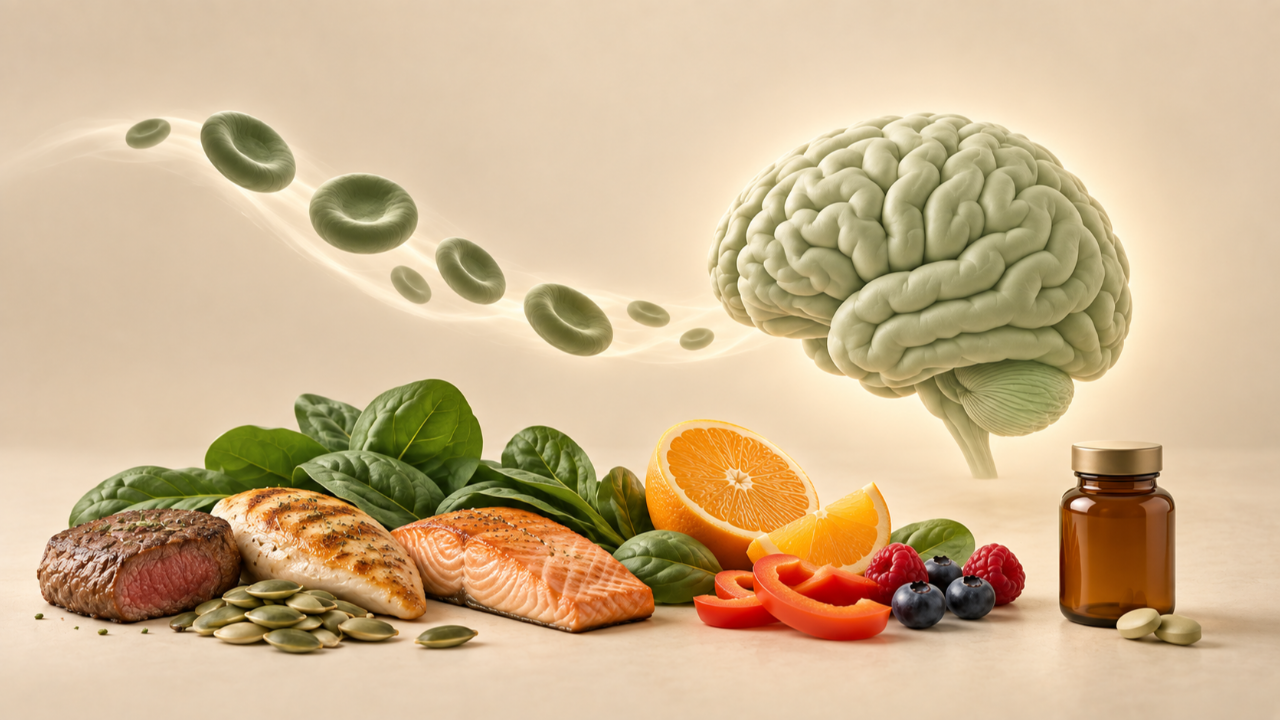
You've been tired most of the day, losing your train of thought during conversations, and feeling like you're thinking through fog. Maybe you've blamed stress, poor sleep, or "just getting older." But one of the most overlooked contributors to brain fog is also one of the most fixable: low iron.
Iron and the Brain: Why It Matters
Your brain is about 2% of your body weight but uses roughly 20% of your oxygen and energy. Iron is central to keeping that supply chain running, in at least four ways:
- Oxygen delivery. Iron is a core component of hemoglobin, the protein in red blood cells that carries oxygen. Less iron means less hemoglobin, and less oxygen reaching your neurons.
- Energy production. The mitochondria in your brain cells rely on iron-containing proteins to make ATP. Think of iron as part of the spark plugs in your cellular engines.
- Neurotransmitter synthesis. The enzymes that build dopamine and serotonin need iron to function. These chemicals shape your motivation, mood, attention, and sleep.
- Myelin maintenance. The cells that produce and maintain myelin, the insulation around your nerve fibers, are among the most iron-hungry in the brain. Faster, cleaner signaling depends on healthy myelin.
Anemia vs. Low Ferritin: Not the Same Thing
These terms get used interchangeably, but they describe different stages.
Ferritin is your body's iron storage protein. Your stores can run low well before your hemoglobin drops. Iron deficiency anemia is the later stage, when stores are depleted and your body can no longer make enough healthy red blood cells.
This matters because a standard blood count can look "normal" while your ferritin is already low. Someone can be iron deficient without being anemic, and may still experience fatigue, poor concentration, and reduced stamina. Research on women with unexplained fatigue and low ferritin, for example, has found improvement in fatigue after iron repletion, even without anemia.
What the Research Shows
The strongest evidence linking iron status to cognition comes from several directions:
- Observational studies in older adults have found associations between anemia and a higher risk of cognitive decline and dementia. Several meta-analyses support the link.
- Intervention studies in younger women have found that correcting iron deficiency can improve attention, memory, and processing speed, with the biggest gains in those who started most deficient.
- Early-life research shows iron deficiency during critical developmental windows can have lasting effects on the brain, which underscores how much the brain depends on this mineral.
A caveat, which I'd encourage every reader to keep in mind: much of the data in older adults is observational. Anemia may contribute to cognitive decline, but it can also be a marker of underlying chronic disease, inflammation, or poor nutritional status that independently affects the brain. We don't yet have large trials showing that treating anemia in older adults prevents dementia. What we can say is that low iron is a credible, modifiable factor worth investigating, not a guaranteed cause.
Why It Happens After 45
Low iron isn't just a problem for menstruating women. In midlife and beyond, common causes include:
- Perimenopause, when heavy or irregular bleeding can drain iron stores
- Reduced absorption, from low stomach acid, long-term acid-blocking medications (PPIs), celiac disease, or H. pylori infection
- Chronic blood loss from the GI tract, including from ulcers, long-term NSAID use, or polyps
- Diet, particularly low intake of red meat, poultry, and fish, or a plant-based diet without attention to absorption
- Chronic inflammation, which can lock iron away and interfere with its use
An important note: in men and postmenopausal women, iron deficiency should never be treated as "just a supplement problem." It's a signal to find out where the iron is going, which may include colon cancer screening or gut health evaluation.
Getting Tested the Right Way
If you're concerned, ask for more than a basic blood count. A fuller picture includes:
- Ferritin (stored iron)
- Serum iron, TIBC, and transferrin saturation (circulating iron and how much is being carried)
- Complete blood count (CBC), including hemoglobin and red blood cell size
- B12 and folate and copper, since deficiencies in these can also contribute to anemia and cognitive symptoms
Two things to keep in mind when reading results. First, ferritin is also an inflammatory marker, so a "normal" value can mask true iron deficiency when inflammation is present. Second, lab reference ranges for ferritin are wide, and a result technically "in range" at the low end doesn't always mean your iron status is optimal for how you feel. Review your numbers with a knowledgeable clinician.
More Isn't Always Better
This is where the story gets nuanced. Iron is essential, but excess iron is not harmless. Iron accumulation in certain brain regions has been associated with neurodegenerative conditions, including Alzheimer's and Parkinson's disease, and iron is a pro-oxidant when unbound. Your brain's relationship with iron is a "Goldilocks" one: too little impairs function and too much may cause damage.
That's why I never recommend supplementing blindly. Test first, supplement under guidance if needed, and retest to confirm you're getting where you need to be.
Supporting Healthy Iron Status
If your iron is low, work with your provider on the cause and a plan. In general:
- Eat iron-rich foods. Heme iron (from meat, poultry, and fish) is absorbed most efficiently. Non-heme sources include lentils, beans, spinach, and pumpkin seeds.
- Pair non-heme iron with vitamin C (citrus, peppers, berries) to boost absorption.
- Separate iron from absorption blockers. Coffee, tea, calcium, and high-dose zinc can reduce uptake when taken at the same time.
- Consider dosing strategy. Some research suggests that every-other-day dosing may improve absorption and tolerability compared with daily dosing. Ask your clinician.
- Recheck your labs after several weeks to months to confirm your levels are responding.
The Takeaway
Your brain is an energy-hungry organ, and iron is part of what keeps it fueled. Low iron won't explain every case of brain fog or cognitive decline, but it's one of the more common and correctable pieces of the puzzle. If you've been struggling with fatigue, poor focus, or mental sluggishness, ask for a complete iron panel. And if it's low, don't stop at the supplement. Find out why.
Source:
https://pmc.ncbi.nlm.nih.gov/articles/PMC8231247/
https://pmc.ncbi.nlm.nih.gov/articles/PMC13090852/
Download the 7 Pillars to a Thriving Mind
A comprehensive ebook guide with journaling prompts by Dr. Kaas to help you protect, preserve and optimize your brain health for a more functional present and future.
We hate SPAM. We will never sell your information, for any reason.